

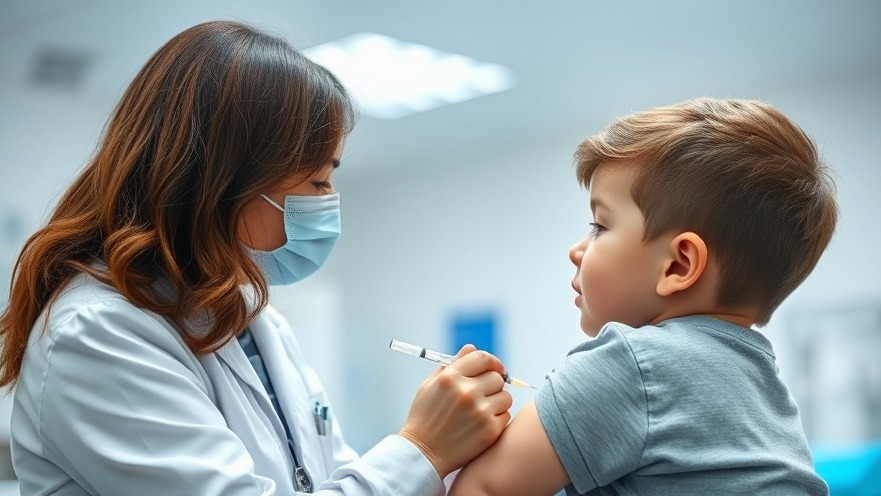
Measles: A Crisis Resurfaces in the United States
After being declared eliminated in the U.S. in 2000, measles has made a startling resurgence, reestablishing its endemic status, as confirmed by the Pan American Health Organization. This revelation follows a year where over 5,000 cases in 45 states have been reported, marking 2026 as a turning point reminiscent of the last major epidemic in 1991.
A Look at the Current Measles Landscape
This year, incidents of measles have climbed alarmingly, including seven fatalities in Pennsylvania and increased case counts in states like New York and Wisconsin. Public health officials are expressing concern that the worst is yet to come if vaccination rates do not improve. Routine childhood vaccination rates, including the measles vaccine, have suffered significantly due to the disruptions caused by the COVID-19 pandemic.
Leadership Under Scrutiny: Robert F. Kennedy Jr.'s Role
As the nation’s top public health official for nearly two years, Robert F. Kennedy Jr. is under fire for his handling of the crisis. Critics argue that his department's messages have been ambiguous at best, creating confusion about the urgency of vaccination. Despite Kennedy's attempts to offer assistance to affected states, his responses appear to lack focus, drawing criticism from within the health community.
The Vaccination Debate: A Priority or an Afterthought?
Kennedy’s historical stance as an anti-vaccine activist raises further concerns regarding his commitment to combatting the measles outbreak. While he has made public statements supporting vaccination, including a vague endorsement of the measles, mumps, and rubella (MMR) vaccine on CNN, many believe his actions do not reflect this urgency. Parents watching the crisis unfold find it disconcerting as Kennedy's recent comments seem to trivialize the seriousness of measles.
Responses from Experts: The Need for a Unified Message
Experts advocate for a clear and direct communication strategy to educate the public about the dangers associated with measles. The absence of a strong directive from the CDC under Kennedy has raised concerns among health professionals regarding the potential consequences of the outbreak. Studies show that misinformation surrounding vaccinations can have dire effects on public health, making it imperative for health leaders to counteract these narratives decisively.
A Broader Look: Global Impact of Measles Outbreaks
Measles isn’t just a U.S. problem; countries such as Canada, Austria, and the United Kingdom are also experiencing increasing case numbers, with some losing their elimination status. The spikes in infections across multiple nations underscore the global nature of vaccine hesitancy and the interconnectedness of public health responses. A concerted global effort toward vaccination could help achieve a milestone in eradicating this highly contagious disease once and for all.
Future Directions: Vaccination as a Crucial Tool
Looking ahead, it is essential for community leaders and health officials to advocate for vaccination as the most effective means of preventing measles. The evidence is clear: endemic diseases can be controlled through proactive health policies and public education. Parents should be equipped with accurate information about vaccinations to make informed decisions for their families’ health.
In conclusion, with measles once again on the rise, it’s crucial for parents and communities to prioritize vaccination and stay informed. The collective responsibility towards public health lies not only in individual choices but also in how effectively information is communicated throughout society.
For more insights into your health and wellness journey, consider staying updated on public health developments, as they directly impact the decisions you make for your family.





Write A Comment