

The Surprising Physics Behind PET Scans
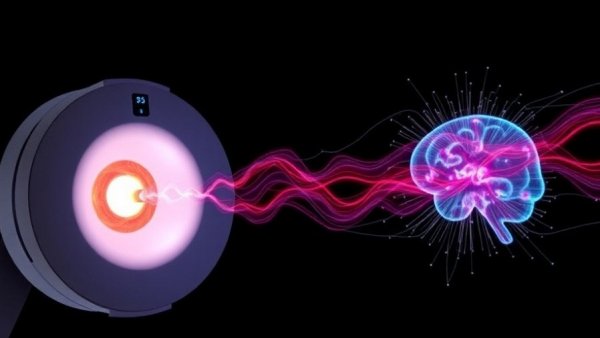
While many of us understand the basic function of a PET scan—seeing areas of high metabolic activity in patients—the intricate details behind this common medical imaging technique can be fascinating. At its core, positron emission tomography (PET) relies on the counterintuitive realm of particle physics, where positrons (the antimatter counterpart of electrons) play a crucial role. This article will unveil the extraordinary physics that makes PET scans possible, from the production of their radioactive tracers to the fascinating dynamics of particle interactions.
Unpacking the PET Scan Process
The process begins with fluorine-18, the radioactive atom necessary for imaging. Unlike stable fluorine-19, fluorine-18 is radioactive and has a half-life of less than two hours. This means it must be produced on-site using a device called a cyclotron. Inside this machine, oxygen-18 is bombarded with protons traveling at incredible speeds. The collision results in the creation of fluorine-18, which is then synthesized with a glucose molecule to produce fluorodeoxyglucose (FDG), the tracer that will be injected into the patient.
Understanding the Role of Antimatter
During the imaging process, the fluorine-18 tracer corrects its neutron deficit by converting one of its protons into a neutron. This fascinating transformation occurs when an up quark in the proton changes to a down quark, leading to the emission of a positron. This transition is essential, as it embodies the peculiarity of antimatter: while positrons share similar properties with electrons, they possess an opposite charge, creating a dynamic interaction once they encounter ordinary matter.
Why Should You Care About Antimatter?
Aptly dubbed the mysteries of modern physics, understanding antimatter isn't just for scientists. For suburban professionals curious about advancements in medical research, recognizing how everyday healthcare relies on complex scientific principles can empower better health choices. PET scans, for instance, help detect conditions like cancer and neurological disorders early—making them valuable tools in the health landscape.
Real-World Applications of PET Scans
Imagine entering a hospital where a simple injection of a fluorodeoxyglucose tracer can provide insights into your body’s inner workings. PET scans are fundamentally about health and wellness. They play a critical role in diagnosing not only cancer but also conditions like Alzheimer's. Understanding the physics behind these scans not only enhances one’s appreciation of science but also underscores the importance of technology in modern medicine and healthcare.
Future Trends in Medical Imaging
The intersection of physics and medicine continues to evolve. As technology advances, the production of tracers and the accuracy of imaging improve. Future developments may enhance the specificity of PET scans, potentially leading to innovative techniques for early diagnosis and treatment. Additionally, as interest in personalized medicine grows, PET scans may be tailored to provide unique insights based on individual metabolic activity.
Wrap-Up: Embracing Scientific Advancements in Healthcare
The world of medical imaging is a testament to the remarkable discoveries of particle physics. By demystifying the role of antimatter in PET scans, we can better appreciate the technology that aids in improving our health outcomes. Living in suburban areas offers unique opportunities to engage with health and wellness innovations. Consistently seeking information about these advancements can enhance your understanding of healthcare options.
If you’re intrigued by the intersection of physics and healthcare, consider staying informed about the latest trends in medical technology and imaging advancements. Knowledge is power when it comes to making informed health choices.




Write A Comment