

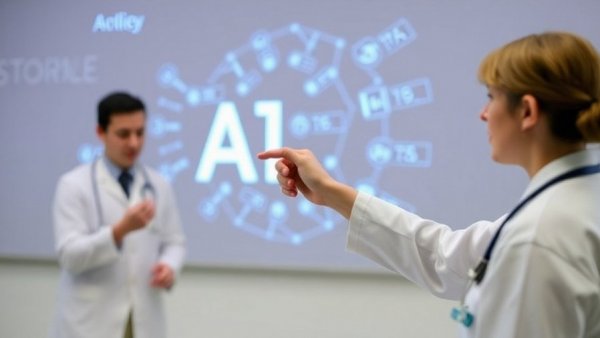
Trust in AI: The Cornerstone of Effective Health Education
As healthcare education evolves, integrating technology like artificial intelligence (AI) opens up a world of possibilities. However, it raises crucial questions about trust and reliability. When health care students seek assistance from AI tools, they need more than quick answers; they require assurance that the information is not only accurate but also aligned with their course material. This is particularly significant in a field where knowledge shapes real-world patient care.
The Importance of Source Validation
Trust is paramount in health education. Students are being prepared for a career where lives are at stake, so they must be confident in the accuracy of information they obtain from AI platforms. The challenge lies in ensuring AI tools point students back to recognized, academically validated resources rather than sending them onto the vast, unregulated expanse of the internet. For example, AI tools like Nora AI, embedded within structured platforms such as Elsevier eBooks, show promise by allowing users to reference course materials directly. This approach minimizes confusion and maximizes learning by grounding students’ experiences within trusted contexts.
Enhancing Learning without Oversimplifying
There is a delicate balance between making learning experiences personalized and maintaining the complexity of healthcare education. A straightforward response from a chatbot may provide immediate relief but risks oversimplifying intricate topics and failing to address context. If an AI tool produces incomplete or misleading information, it could hinder rather than help a student’s learning journey. Students need to be equipped with knowledge to discern when AI responses are insufficient and when to seek guidance from their educators. Educational strategies that encourage students to ask questions—whether through AI interactions or classroom settings—can lead to deeper understanding and critical thinking.
Fostering Critical Thinking and Engagement
AI's role should not only be a passive instrument used for quick answers but an active facilitator of students' learning. It should encourage users to not just seek answers, but to engage with the material more deeply. AI tools can inspire follow-up inquiries and open dialogues, fostering a culture of critical thinking within the classroom. Health care education must prioritize teaching students the skills they need to evaluate AI-generated information, enabling them to become not just passive consumers of knowledge but informed thinkers who actively engage with the material.
Looking Ahead: The Future of AI in Health Education
As we observe advancements in AI technology, the future holds significant potential for transforming how healthcare is taught. By creating more robust AI systems that maintain a transparent connection with reputable sources, educational institutions can help students navigate their learning journey with confidence. The goal is for AI to become a bridge that links students back to essential reading materials and reinforces learning objectives, supporting diverse learning styles while accommodating the realities of modern education.
Actionable Insights: Making AI Work for You
For both students and educators, unlocking the full potential of AI requires understanding its role and regulating its use in educational environments. Students should familiarize themselves with the specific AI tools available to them, learning how to leverage technology effectively while ensuring the accuracy of the information they receive. Educators, on the other hand, must embrace these tools to enhance their teaching methodologies, helping students connect theoretical knowledge with practical application in real-world scenarios. Only then can the integration of AI in health education yield true learning opportunities devoid of misinformation.
In health and wellness education, the use of technology must support student's learning processes rather than complicate them. By prioritizing source grounding and trusting relationships between students, educators, and technology, healthcare students can navigate their educational paths with assurance and clarity, ensuring they are prepared to make informed decisions in their professional futures.




Write A Comment